|
 |
 |
 |
 |
 |
 |
 Burial at Kirkstall: surviving tombs
(1/2)
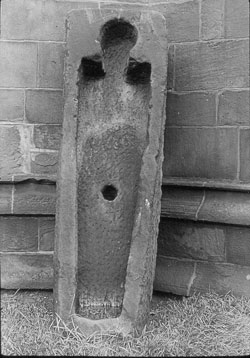
Burial within the precinct at Kirkstall was at first intended only for members of the community, since the General Chapter of the Order ruled that no outsiders, except for guests and familiars who died during their stay, should be buried at Cistercian houses. The General Chapter later revised its position: outsiders were permitted to be buried at Cistercian abbeys and Kirkstall, like other houses of the Order, now became a possible burial site for patrons, benefactors and neighbours, as well as family and friends. Burial within the walls of the monastery precinct was a great privilege for the laity. To be physically present forever within the abbey grounds was highly desirable for it was believed that this would help the soul’s passage to salvation. Requests for burial within the precinct of Kirkstall underline the importance of this abbey to the locals and are testimony to the high reputation of the monks. Lay burial was also beneficial to the community since those who donated their body generally also gave a gift, and some of these were substantial. For example, in the twelfth century Ralph of Adewich gave his body to the monks of Kirkstall to be buried within their cemetery, along with land within the court of his grange at Bessacar;(1) at the beginning of the thirteenth century Stephen of Hamerton granted the community twenty loads of hay and his chattels along with his body for burial; Nigel of Horsforth(2) gave his body and land in Horsforth. The community might also consolidate relations with the family of the deceased and secure their help and patronage in the future. A wide range of people sought burial at Kirkstall Abbey. Although we do not have a complete record of everyone who was buried or requested to be buried at the house miscellaneous references in charters (such as those just mentioned) and several remains of coffins shed some light on the identity of those who sought burial and the various places in the precinct where they – and also members of the community – were interred. |